What Is Digital Marketing Content?

TL;DR
- Defines digital marketing content as the value provided before a purchase.
- Explains the shift from interruptive advertising to inbound attraction.
- Identifies content as the bridge of trust between problems and solutions.
- Introduces the four psychological pillars of a robust content strategy.
- Highlights the critical role of written text for SEO and authority.
Digital marketing content is the currency of the web.
Think of the internet as a massive, chaotic highway. Your content? That is the vehicle carrying your brand’s message. Without it, you aren't even on the road. You are a billboard standing in the middle of the desert: visible to no one, relevant to nothing.
But let's clear up a massive misconception immediately: It is not just blog posts.
That limiting belief keeps businesses small. Content is the fuel for every single digital engine you run. It is the witty caption on your Instagram, the script for your YouTube video, the subject line in that cold email, and the landing page copy that convinces a stranger to pull out their wallet.
In this guide, we aren't just tossing around definitions. We are breaking down the mechanics of how content builds empires, the four pillars you need to survive, and how to stop "posting" and start "dominating."
What Exactly Is Digital Marketing Content?
Strip away the buzzwords. At its core, digital marketing content is the value you provide to an audience before they ever pay you a dime. It is the intersection of information, entertainment, and utility.
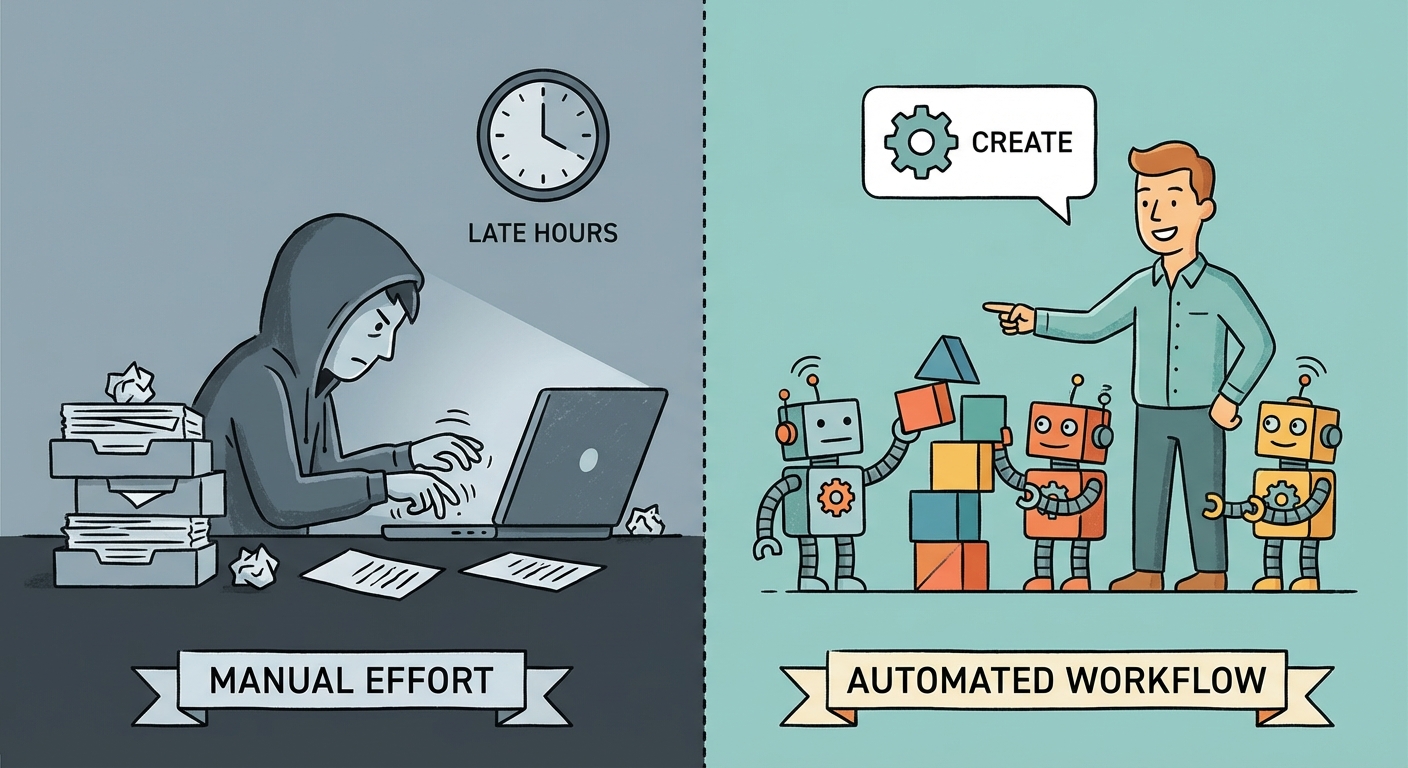
For decades, marketing was "interruptive." You were trying to watch Seinfeld, and a commercial interrupted you to sell laundry detergent. You were reading a magazine, and a glossy page interrupted you to sell a minivan. That was the old world.
The digital world is different. Consumers have ad blockers, second screens, and infinite choices. They do not tolerate interruptions.
This shifted the game to "inbound" marketing. Instead of shouting at people with ads, you create valuable assets that answer their questions or solve their problems. You don't chase them; you attract them.
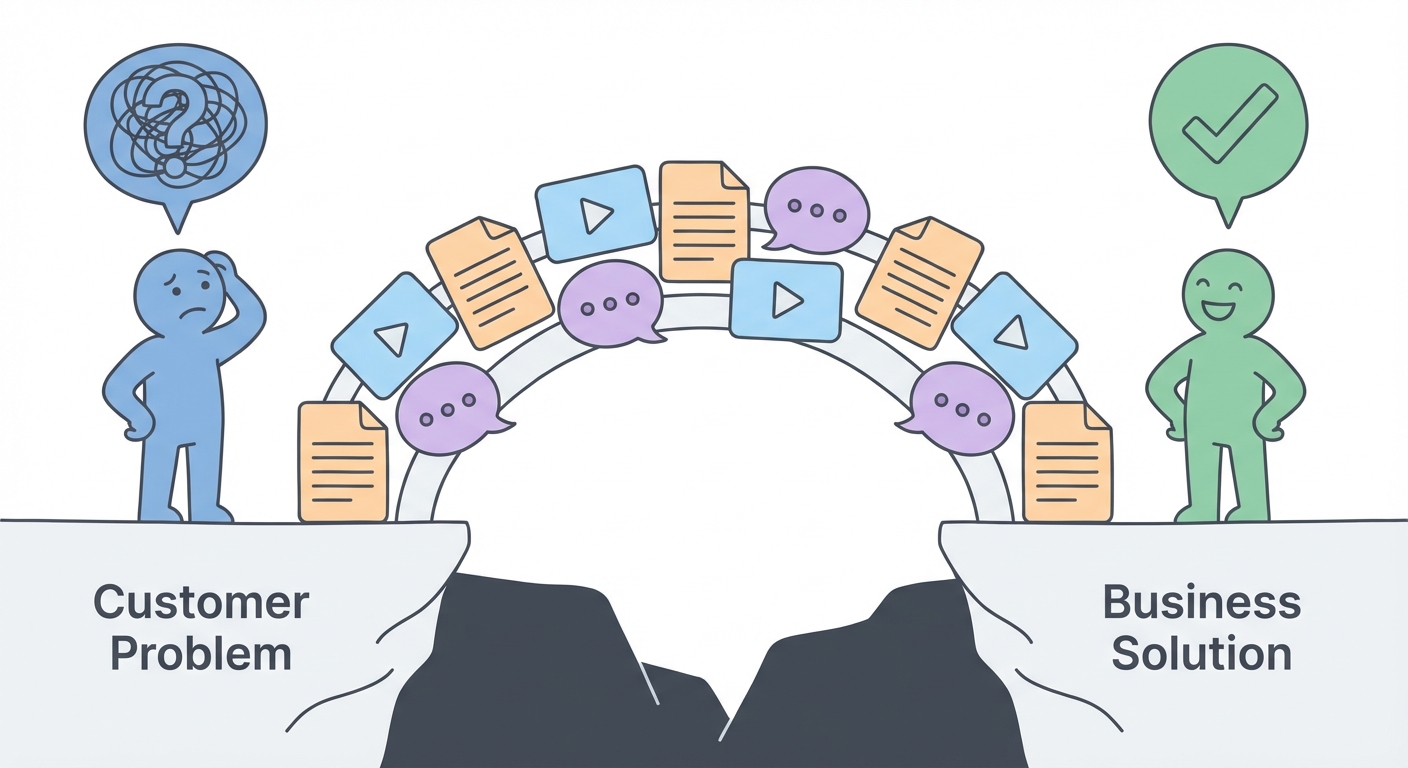
The "Why" is simple: Content builds a bridge of trust.
When a user frantically Googles a solution to their problem and finds your guide, you aren't selling—you're helping. That help builds authority. When they are finally ready to buy, they don't go to the stranger. They go to the expert who helped them three weeks ago.
The 4 Main Pillars of Digital Content
Trying to "do content" without understanding the formats is like trying to build a house with a spoon. Different formats trigger different psychological responses. A robust strategy leans on four pillars.
1. Written Content (The Foundation)
Despite the hype around TikTok and video, the internet is still built on text. Google is a text-based crawler. If you want to be found, you need words.
- Formats: Blogs, whitepapers, eBooks, case studies.
- The Role: This is your heavy lifting for SEO (Search Engine Optimization) and thought leadership. It’s where you prove you know your stuff.
- Strategic Fit: If you don't have time to churn out high-level articles yourself, many brands leverage SEO content writing services to keep this foundation solid while they focus on other channels.
2. Visual Content (The Hook)
The human brain processes images 60,000 times faster than text. Visuals are the "stopper." They freeze the doom-scroll on social media long enough for your message to slip through.
- Formats: Infographics, memes, slide decks, data visualizations.
- The Role: Simplifying the complex. Have a boring statistic? Turn it into a chart. Have a complicated process? Make it an infographic.
3. Video Content (The Engager)
Video is the closest you can get to face-to-face interaction at scale. It conveys tone, emotion, and personality in a way text never can.
- Formats: Short-form (TikTok, Reels, Shorts) for reach; Long-form (YouTube, Webinars) for depth.
- The Role: Building emotional connection. According to recent video marketing statistics, video consistently offers the highest ROI because it hacks the trust-building process.
4. Audio Content (The Companion)
Audio is unique because it is passive. Your audience can consume your brand while driving, working out, or doing dishes.
- Formats: Podcasts, audiobooks, audio-grams.
- The Role: Intimacy and retention. A podcast listener might spend 30+ minutes with you in their ear—that is a lifetime compared to the 3 seconds you get on a Twitter post.
How Does Content Fit Into the Marketing Funnel?
One of the biggest mistakes brands make is committing "random acts of content." They post a meme on Monday and a heavy sales pitch on Tuesday, with zero logical flow. Content must map to the buyer's journey.
Top of Funnel (Awareness)
- The Goal: Traffic and Attention. "Hi, I exist."
- The Content: Broad, educational, and entertaining. It answers questions like "What is X?" or "How do I fix Y?".
- Examples: Viral social posts, "Ultimate Guide" blog posts, educational YouTube videos.
Middle of Funnel (Consideration)
- The Goal: Leads and Trust. "I know my stuff."
- The Content: The user knows they have a problem; now they are shopping for solutions. Your content here proves you are the best option.
- Examples: Webinars, in-depth case studies, email newsletters, comparison guides (e.g., "Us vs. Competitor").
Bottom of Funnel (Decision)
- The Goal: Sales. "Let's do this."
- The Content: The user is ready to buy. Remove the friction.
- Examples: Product demos, pricing pages, customer testimonials, free trial sign-ups.
Content Marketing vs. Copywriting: What’s the Difference?
Here is where most brands trip over their own shoelaces. They treat content and copywriting as synonyms. They are not.
Content Marketing is the "Give." It focuses on education, entertainment, and long-term relationships. It is generous. It says, "Here is some free value to help you succeed." It plays the long game.
Copywriting is the "Ask." It focuses on persuasion and immediate action. It is the sales letter, the Google Ad text, the "Buy Now" button. It says, "Here is why you should take action today."
A successful digital strategy needs both. Content brings them to the door; copywriting invites them inside to buy. If you only have content, you have an audience but no sales. If you only have copy, you have a pitch but no one listening.
How Do You Create a Digital Content Strategy?
Stop posting and praying. Success comes from a boring, documented process.
Step 1: Define the Audience You cannot write for "everyone." If you write for everyone, you write for no one. Create specific personas. Are you talking to "Busy CTO Bob" or "Budget-Conscious Mom Sarah"? Their pain points are different, so your content must be different.
Step 2: The Content Audit Before you create new stuff, look at what you already have. Which old blog posts are getting traffic? Which videos flopped? Update the winners and delete the losers.
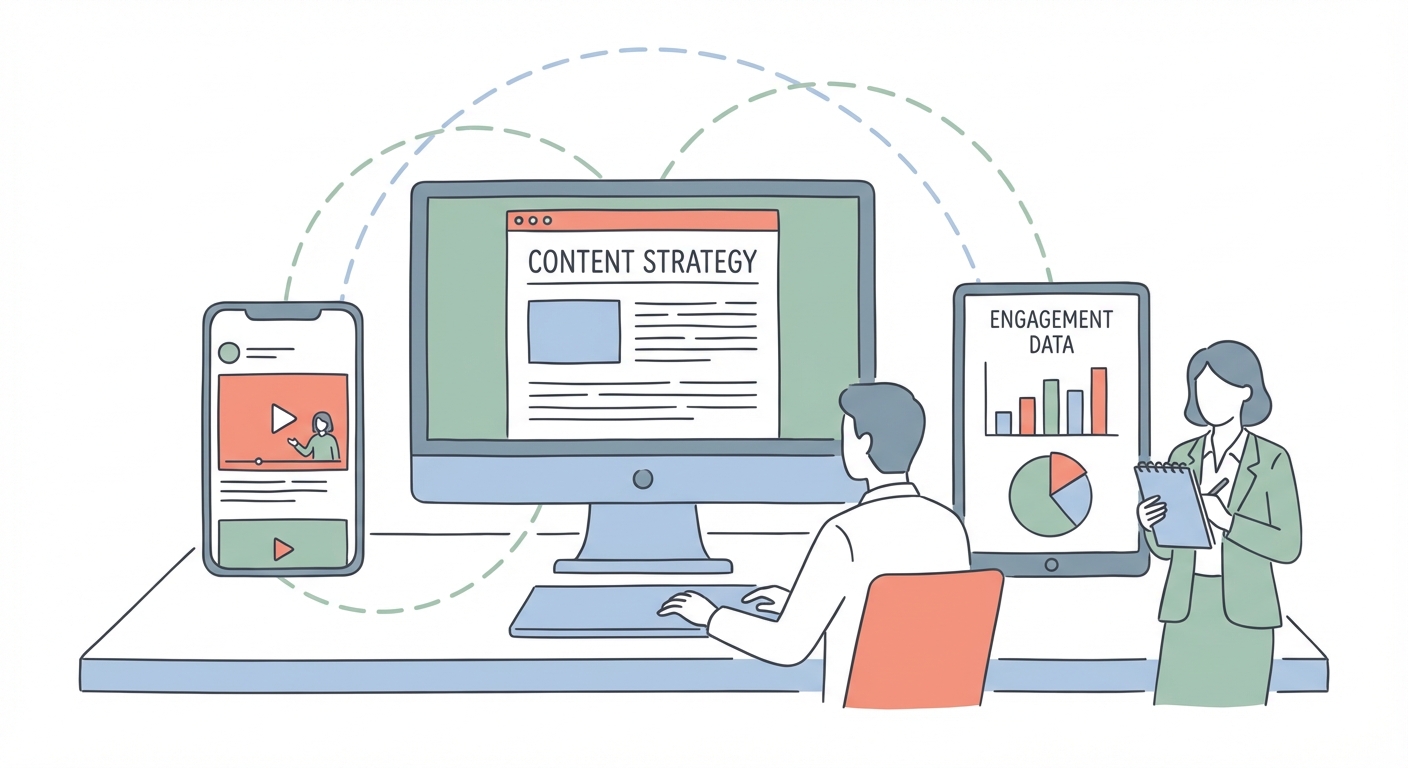
Step 3: The Content Calendar Consistency is the only "hack" that works. You need a schedule. Whether it is a simple spreadsheet or a tool like Asana, you must map out what goes live and when. When you are planning your content calendar, ensure you mix up your formats—don't just post links to your blog every single day.
Step 4: Distribution The "Build it and they will come" mentality is a lie. You should spend 20% of your time creating content and 80% distributing it. Adopt the mantra: "Create once, distribute forever." Turn that one YouTube video into a blog post, three TikToks, five Tweets, and an email blast.
How Do You Measure Content Success?
You can't manage what you don't measure. But beware of "vanity metrics" like likes and followers. They look good on a report, but they don't pay the rent.
- Traffic Metrics: Are people actually seeing it? Look at pageviews and unique visitors.
- Engagement Metrics: Do they care? Look at "Time on Page" (are they reading?) and Bounce Rate (did they leave immediately?).
- Conversion Metrics: Did they take action? This is the money metric. Look at Click-Through Rates (CTR) and leads generated.
For a deep dive on setting this up, check out a standard Google Analytics 4 guide to ensure you are tracking actual events, not just hits.
Frequently Asked Questions
1. Is digital marketing content the same as social media marketing? No. Social media is a channel (like a delivery truck). Content is the asset (the package inside the truck). You can have content without social media (like a blog), but you can't have effective social media without content.
2. How often should I publish? Quality beats quantity, but consistency is vital. You are training your audience to expect you. For blogs, 2-4 times a month is a solid start. For social media, daily activity is often required to stay relevant in the algorithm.
3. Do I need a big budget? Not necessarily. You can start with high-quality written blogs and smartphone videos. The cost lies in time and creativity. Some of the most viral content on the web was shot on an iPhone in a messy living room.
4. What is the best type of content? Video currently wins on engagement across almost all platforms. However, long-form written content (like this guide) remains the king for SEO and building long-term domain authority.
Conclusion
Content is not just a department in your marketing team; it is the voice of your brand. In a digital-first world, your content is often the first, second, and third interaction a customer has with you. It determines whether they see you as a commodity or an authority.
If your current strategy feels like throwing spaghetti at the wall to see what sticks, it’s time to stop. Audit your assets, define your pillars, and start building bridges instead of barriers.