Ecommerce SEO: 50 Proven Strategies to Rank Higher

Introduction
So, you've got an online store, right? But it feels like it's buried somewhere in the digital dust. In today's crazy online shopping world, it's tough to get noticed. So how do you make sure your ecommerce shop doesn't just disappear? The secret sauce is Ecommerce SEO. Whether you're a seasoned pro or just starting out, knowing SEO is your golden ticket to climbing those search engine rankings and getting more eyes on your stuff. This post is gonna walk you through some solid strategies to help you rank better, with simple, doable tips. Let's get your online store humming and watch your visibility skyrocket.
Understanding Ecommerce SEO
Basically, Ecommerce SEO, or Search Engine Optimization for ecommerce, is all about making your online store show up higher in search results. It's a bunch of different tricks to make your site more visible, so people can actually find the products and services you're selling. Since everyone's trying to sell online these days, good SEO is super important if you want your ecommerce site to stand out.

"Boost your eCommerce sales with SEO Growth, discovery, and increased revenue"
Importance of SEO in Ecommerce
SEO is a huge deal for getting people to your ecommerce site without you having to pay for ads. You know how most website traffic comes from organic search? Like, over 53% of it (How Much Traffic Comes From Organic Search? (2025 Data)). That means search engines are a massive way to find new customers. When your site ranks higher, more people will find you, which usually means more sales. Think about an online clothing store – if they do SEO right for terms like "summer dresses" or "winter coats," they'll probably sell a lot more of those items.
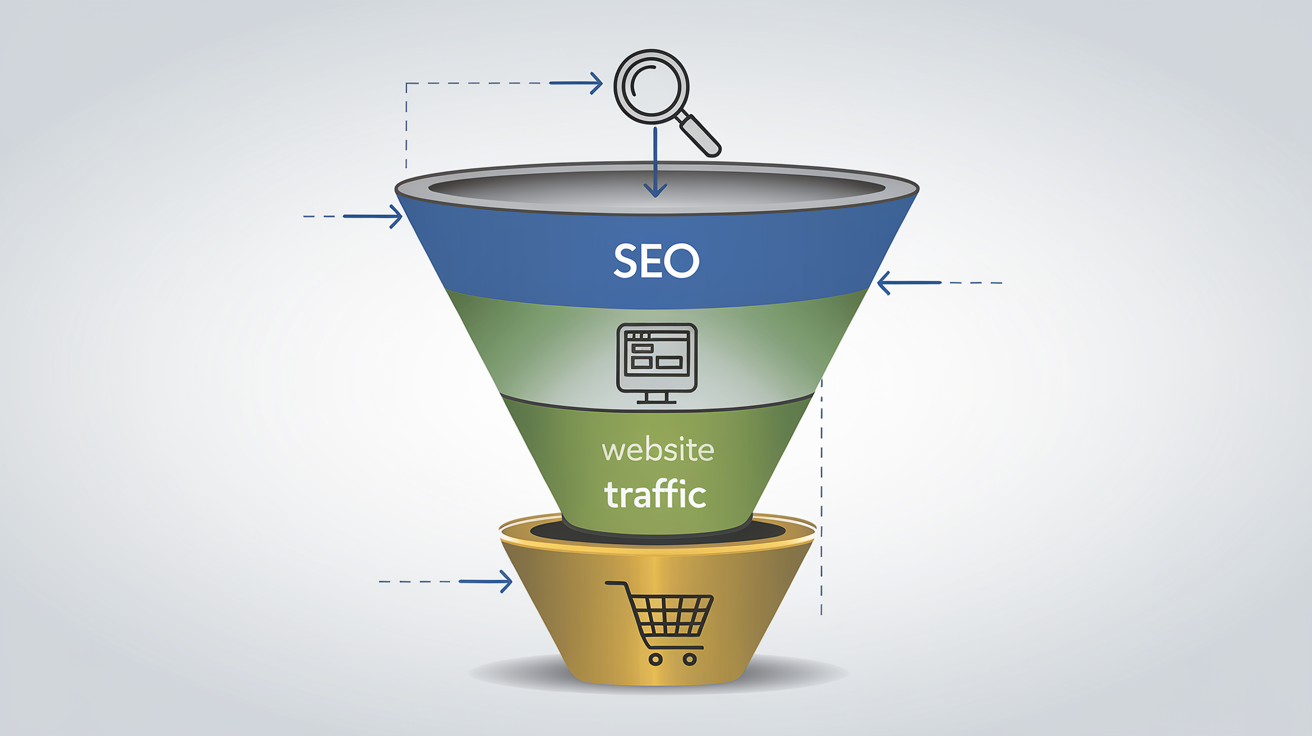
"Visualize SEO's journey from search to sales with a seamless flowchart design."
The Basics of Ecommerce SEO
If you want your online business to do well, you gotta get the basics of Ecommerce SEO down.
Keyword Research
Keyword research is like the foundation of Ecommerce SEO. It’s about figuring out what words and phrases people actually type into search engines when they're looking for stuff you sell. By using these keywords, your site can match what people are searching for. For example, for an ecommerce store selling electronics, you'd want to find keywords like "affordable electronics" or "best budget laptops."
On-page Optimization
This is about making your individual web pages better for search engines. It means tweaking things like title tags, meta descriptions, and product descriptions to include those keywords you found. So, for that electronics store, optimizing a category page for "affordable electronics" would help it show up higher when someone searches that.
Basically, Ecommerce SEO isn't just about stuffing keywords everywhere. It's about making your whole site better for users and search engines. Focusing on keyword research and on-page optimization helps you get found by people searching for your products, which can really grow your customer base and sales.
On-Page SEO Strategies
On-page SEO is super important for getting your website seen and making your eCommerce business rank higher. We're gonna look at two key things: making your product descriptions awesome and using alt text for your images. These can really boost your Ecommerce SEO game.
Optimizing Product Descriptions
Writing good product descriptions is more than just throwing in keywords. You need to create content that's unique and interesting for customers, and also tells search engines your page is relevant.
Unique Descriptions
Don't just copy what the manufacturer wrote. Make your own descriptions that really highlight what's great about each product. This helps with SEO and also makes customers more likely to buy. Some reports suggest that sites with unique product descriptions see a pretty big jump in search rankings compared to those using generic text.
Schema Markup Implementation
Using schema markup can make your product pages even better. It's like giving search engines a cheat sheet so they understand your content more easily. This can lead to cool "rich snippets" in search results, which grab attention and get more clicks. For instance, adding product schema can show the price, if it's in stock, and reviews right there in the search results.
Using Alt Text for Images
Images are a big part of any ecommerce site, showing customers what they're buying. But you can also use them for SEO by putting good alt text on them.
Alt text is just a short description of an image. It helps search engines figure out what the image is about. It's also really important for people who can't see well, as screen readers will read the alt text aloud.
Effective Alt Text Strategies
To get the most out of your alt text:
- Be descriptive but keep it short. Focus on the main things in the image.
- Use relevant keywords naturally. Don't just stuff them in there.
- Make sure each image has its own unique alt text. This gives search engines more context.
Publish7 SEO strategist AI tool
Enhancing Product Pages
Making your product pages better with on-page SEO can really help your search engine rankings. Besides unique descriptions and schema markup, think about these other things too.
Unique Descriptions
Go back and make your existing product descriptions more interesting and informative. Talk about what makes your product special and answer common customer questions right in the description.
Schema Markup Implementation
Use structured data not just for products, but also for reviews and ratings. This can make your listings really stand out in search results.
Google's structured data guidelines
Case Study: Effective On-Page SEO Strategies
There was this one ecommerce company that totally redid all their product descriptions and added structured data. It worked out pretty well – they saw a 50% increase in organic traffic in just six months. It really shows how much good on-page SEO can do.
By using these on-page SEO tricks, you can make your eCommerce website more visible, attract more customers, and ultimately make more money. Just remember, you gotta keep optimizing and stay on top of the latest SEO trends.
Off-Page SEO Tactics
In the super competitive world of online marketing, using good off-page SEO strategies is key to getting your website noticed and improving its search engine rankings. We'll cover some important stuff here, like getting quality backlinks and working with influencers, to make your Ecommerce SEO better.
Building High-Quality Backlinks
Backlinks are still a huge deal for SEO. They're like a thumbs-up from another website, telling search engines that your content is trustworthy and valuable. Some studies show that sites with lots of quality backlinks tend to rank way higher than those without.
Example of Successful Backlink Strategy
Imagine a fashion store partners with popular fashion blogs to feature their new collection. Getting links from these trusted sites not only gets them seen but also helps their search engine performance. This is a great way to boost their Ecommerce SEO and get more people to their site.
Actionable Takeaway
Focus on getting good links, not just a ton of them. Try to get links from sites that are well-respected and relevant to what you do. You can use tools like Ahrefs or Moz to find good places to get links from.
Influencer Partnerships
Working with influencers is a really effective way to get your brand out there. Influencers can introduce your products to new people, and when they recommend you, it can really help your search engine rankings.
Actionable Takeaway
Find influencers whose followers are like your ideal customers. Build real partnerships where they can genuinely promote your brand. Tools like BuzzSumo can help you find influencers in your industry.
Leveraging Social Media
Social media is a big part of off-page SEO because it makes your brand more visible and gets people interacting with you.
Creating Shareable Content
Make content that people like and want to share. This not only gets your brand in front of more people but can also lead to more backlinks, as others might link back to your stuff.
Engaging with Audiences
When you actively engage with your audience, you build a community and loyalty. Reply to comments, join conversations, and create interactive content to keep your online presence strong.
Actionable Takeaway
Use tools like Google Analytics to see what content works best and adjust your strategy. Keep your social media profiles updated with new content to keep your audience interested.
By using these off-page SEO tactics, you can really improve your search engine rankings and get more people to your eCommerce site. Doing this consistently, along with keyword research and technical SEO tweaks, will help your site perform its best.
Technical SEO Techniques
Technical SEO is a fundamental part of any good SEO plan. It's all about making sure the behind-the-scenes stuff on your website helps search engines like Google understand and rank your content better. Here, we'll talk about two really important things for Technical SEO: making your site faster and making sure it works well on mobile.
Improving Site Speed
How fast your site loads is a big deal for both how users feel about it and how search engines rank you. A site that loads quickly makes people happier and helps you rank higher. It's been found that if your page takes even one extra second to load, you can lose a lot of potential customers. Plus, Google actually uses site speed as a ranking factor, so it's pretty important for Ecommerce SEO.
How to Improve Site Speed
- Optimize Images: Make your images smaller without making them look bad. This speeds up loading.
- Enable Browser Caching: This lets returning visitors load your site faster because some of the data is saved.
- Minimize HTTP Requests: Try to have fewer things on a page, like scripts and images, to make it load quicker.
Here’s a quick look at how site speed can change:
| Metric | Before Optimization | After Optimization |
|---|---|---|
| Page Load Time | 4.8 seconds | 2.3 seconds |
| Bounce Rate | 55% | 35% |
| Conversion Rate | 3.2% | 4.5% |
MOZ local ranking factors
Ensuring Mobile Friendliness
With more and more people using their phones, making your website work great on mobile is a must. Google basically looks at the mobile version of your site first for ranking. A mobile-friendly site can really help your search engine rankings and make users happier.
Responsive Design
Responsive design means your website automatically adjusts to fit any screen size, giving people a smooth experience no matter what device they're using. This is a key part of any good SEO strategy.
- Flexible Grids and Layouts: Use website layouts that scale nicely on different screens.
- Adaptive Images: Show different sized images depending on the user's screen.
Mobile-First Indexing
Since Google uses the mobile version of your site for indexing and ranking, you need to make sure your mobile site has all the same content and info as your desktop site. This way, you won't lose any search engine ranking power.
- Consistent Content: Make sure your mobile site is pretty much the same as your desktop site.
- Structured Data: Use the same structured data on both mobile and desktop sites to help search engines understand them.
Case Study: Impact of Technical SEO Improvements
There was this big ecommerce platform that made some technical SEO improvements. After they sped up their site and made sure it was mobile-friendly, they saw a 25% jump in organic traffic and a 15% boost in how many people actually bought something. It really shows how important Technical SEO is for ecommerce success.
SEO Strategies
By using these Technical SEO techniques, you can really make your website perform better, give users a better experience, and ultimately, rank higher in search results. Just remember, you gotta keep checking and updating things to keep those improvements going.
Conclusion
So, to get good at Ecommerce SEO, you need to do a bunch of things. Understand the basics of SEO and then use practical strategies for different areas. By using on-page SEO tricks, like making product descriptions better and using the right keywords, and off-page SEO stuff, like getting good backlinks, businesses can really improve their search engine rankings. Technical SEO, like making your site faster and mobile-friendly, also helps a lot by making sure users have a good experience. As you start using these strategies on your eCommerce platform, remember that SEO is something you have to keep working on and adjusting. Start with the most important things and watch your online visibility get better. Ready to take your eCommerce business to the next level?